NWEA MAP Scores by Grade: A Practical Guide
Imagine an assessment tool used in over 145 countries that monitors learning patterns from K through the end of secondary school. This platform goes beyond measuring what learners know – it charts how their understanding develops year after year using a unique map test scores chart 2025 metric.
The RIT score scale offers a uniform way to track progress across content areas and grade levels. Rather than traditional grading, it reveals exactly where learners excel and where they need help. Instructors use these data points to customize lessons, while households obtain a clearer picture about their child’s educational journey.
Computer-adaptive testing power this approach. Questions adapt rigor based on responses, creating individualized testing experiences for each student. This method yields higher-fidelity data than traditional exams, helping schools detect learning gaps early.
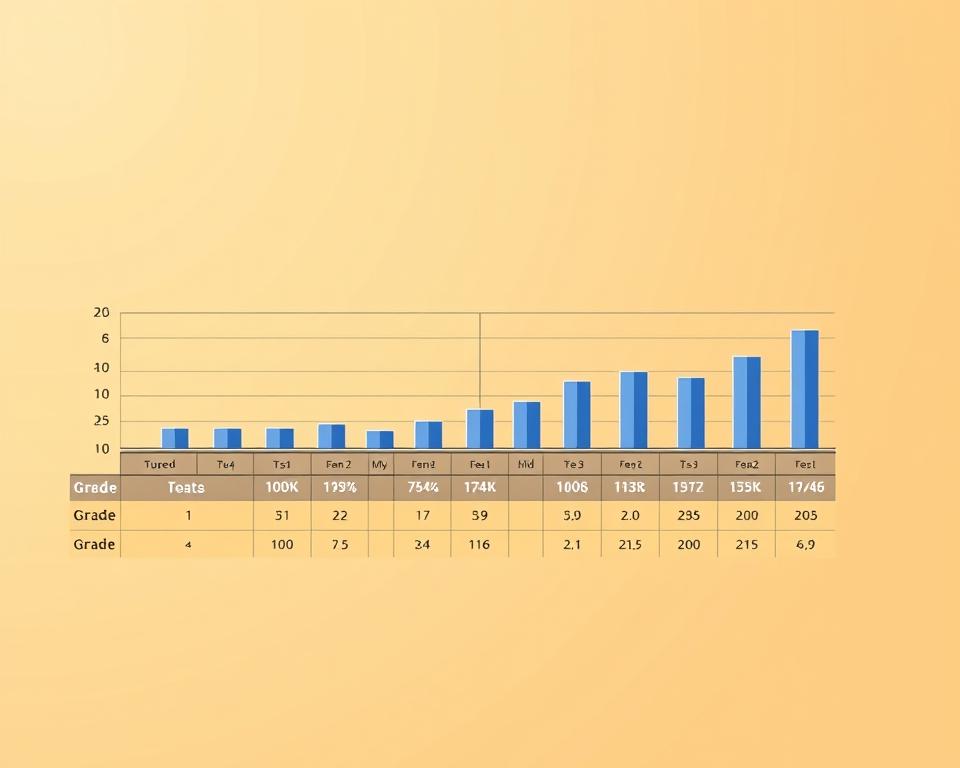
Main Points
- Specialized metric tracks learning patterns over time
- Adaptive algorithms tailors question difficulty
- Enables cross-subject comparisons from primary to secondary school
- Helps create targeted support strategies
- Adopted worldwide across diverse educational systems
Introduction to MAP Testing and Its Importance
Contemporary classrooms make greater use of data-informed tools to gauge student development. One innovative approach uses adaptive questioning that adjusts with individual abilities, delivering personalized evaluations for each student. This model supersedes static exams with high-resolution assessments that pinpoint specific knowledge levels.
The assessment fine-tunes question difficulty instantly based on responses. If a student gets an item right, the next item increases in difficulty. An incorrect answer triggers an easier follow-up. This real-time calibration sustains focus while collecting precise data about current skills.
Core subjects like mathematics and reading are central to the test, with optional science components. Sessions typically run less than an hour per subject, limiting fatigue. National comparison data helps schools understand how their classes stack up relative to peers across the country.
Empowering Learning Communities
Educators get detailed reports highlighting class trends and individual needs. These findings inform changes in lesson plans and provide targeted support. For example, a group finding fractions challenging might get extra practice materials.
Caregivers gain easy-to-read progress views showing strengths and growth areas. Many districts pair results with curated learning resources from educational partners, enabling home–school coordination opportunities. Regular assessments track improvement patterns across academic years, illustrating long-term growth paths.
How NWEA MAP Uses the RIT Scale
Accurate student assessment requires innovative scoring methods that capture true learning patterns. The RIT measure reshapes how schools track development, delivering comparable tracking from elementary years through high school.
Equal-Interval Benefits
Unlike percentage-based systems, the RIT framework uses equal increments. A +5 gain in the 180s means the same growth as in the ~230 range. This stability lets educators see true progress across grade spans.
Growth Tracking Through Multiple Assessments
Seasonal windows provide coherent growth timelines. Fall establishes starting points, winter results show mid-year gains, and spring reflects yearly outcomes. Instructional leaders use these signposts to tune teaching strategies.
| Grade Level | Math Average | Reading Average | Language Average |
|---|---|---|---|
| Grade 3 | 195 | around 201 | 198 |
| Fifth Grade | 214 | ~212 | 209 |
| Seventh Grade | ~228 | 224 | ~221 |
Comparing Subjects with RIT
The system flags strengths in specific subjects through color-banded reports. A student might show strong math results while needing help in reading. These patterns help create individual learning paths.
Norms and percentiles frames performance. Schools see how their classes perform compared with national groups, while families understand their child’s individual learning path.
Making Sense of NWEA MAP Scores by Grade
Educational progress tracking transforms raw numbers into instructional moves through thoughtful analysis. Color-banded visuals clarify complex information, allowing educators identify trends at a glance. Five color bands align individual results to national averages, providing clear visual benchmarks.
The quintile system uses colors to indicate relative standing. Top blue band marks top performers surpassing 80% of peers, while red indicates immediate intervention needs. This quick color read guides resource allocation.
| Percentile Range | Color Code | Instructional Action |
|---|---|---|
| 01–20 | red | Focused support |
| 21st-40th | orange | Structured practice |
| 41st-60th | Yellow | Monitored practice |
| upper-middle 20 | Green | Enrichment opportunities |
| 81–100 | blue | Fast-track options |
Implications for Instructional Decisions
RIT score ranges enable temporary groups for small-group lessons. A class might have three teams working on different map test scores chart percentile 2025 concepts within the same period. This setup maintains engagement with material appropriately leveled to their current abilities.
District instructional directors use roll-up reports to spot curriculum gaps. If multiple schools report low reading scores in specific bands, administrators might add targeted materials. Teachers pair these insights with classroom evidence to refine teaching methods.
How Performance Shifts by Grade
Student progress progresses in distinct phases, each needing specific evaluation approaches. Understanding grade-level expectations informs instruction while showing to families how skills accumulate. The following analysis reveals how measurement tools capture growth through specific data points.
Early Learning: Kindergarten through 2nd Grade
Young learners demonstrate swift skill acquisition through core basics. Median mathematics results jump from ~140 in K to 175 by second grade. Reading scores follow similar patterns, climbing from about 137 to about 172 across these initial grades.
Key focus areas include grapheme–phoneme links and early number sense. Spring assessments often capture dramatic improvements as children master early literacy concepts. These measurements enable teachers to spot students needing extra phonics practice or number recognition support.
Grades 3–4: Strengthening Skills
Grades 3 and 4 signal a transition from learning basic literacy toward content-area reading. Mathematics medians reach 200 by fourth grade, indicating new map test scores chart 2025 abilities in multiplication and fractions. Language conventions scores show improving grammar and writing skills.
Teachers use this data to work on common challenges like problem comprehension. Class reports might reveal strong computation groups but requiring support with unit conversions. Purposeful mini-lessons address these needs before the upper grades.
Advanced Application: 5th through 8th Grade
Upper grades demand more sophisticated thinking across subjects. Median math scores trend upward from 209 to 225, reflecting algebra pre-readiness. Reading assessments now measure inference-making and textual evidence use.
Growth patterns taper modestly as material becomes more conceptual. A six-point annual gain in seventh grade math indicates mastery of ratio and proportion. These insights support alignment of curriculum with readiness benchmarks.
Turning MAP Data into Progress
MAP findings become powerful tools when put into practice. By partnering, teachers and families can turn assessment findings into targeted actions that address individual needs.
Spotting What to Boost and Improve
Detailed reports highlight skill clusters where learners excel or need work. Teachers might identify a student with geometry strengths but requires fraction reinforcement. Families can see signals like steady vocabulary gains alongside lagging fluency.
The color ranges guide focus. A blue band in math reasoning suggests readiness for advanced problems, while an orange range in grammar call for focused work. Regular progress checks monitor progress arcs across subjects.
Practical Ways to Act on Data
Flexible grouping proves essential. Educators might set up rotating groups for phonics reinforcement or pre-algebra work. At home, parents could leverage district-provided tools to strengthen specific skills through brief daily work.
Schools often align outcomes with recommended resources. These might include hands-on geometry games or tiered book lists. Joint planning supports each learner gets supports aligned to their trajectory.